Sargasso seaweed monthly status: 2,500 km scale tips guide
"The sea holds secrets in its floating forests, where currents dictate the rhythm of life and the movement of species across vast distances."
* Identify the Sargasso Sea by its unique boundaries formed by the Gulf Stream and North Atlantic Drift. * Recognize the biological role of the area as a critical spawning ground for eels. * Understand the scale of the floating seaweed mats, which can span thousands of kilometers. * Note that seaweed density is influenced by the North Equatorial Current.
How is the Sargasso seaweed status defined each month?
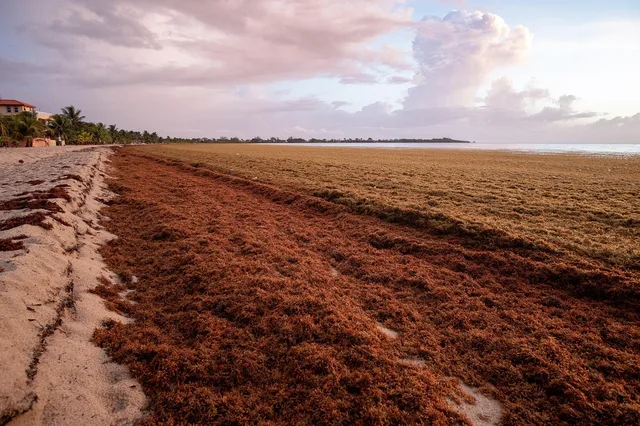
At dawn, the researcher leans over the wooden pier to feel the cold salt spray while tracking the shifting sargasso seaweed monthly status. At dawn, a researcher leans over the wooden pier to feel the salt spray while tracking the shifting sargasso currents.
A researcher sits on a wooden pier, watching the rhythmic swell of the Atlantic Ocean while noting the direction of the wind. The Sargasso seaweed monthly status is primarily governed by the circular movement of water within a 4,000 km (2,500 mi) wide area.
According to World Bank data, Mexico recorded international tourist arrivals of 51,128,000 in 2020.
This region is not a landmass but a unique zone encircled by the Gulf Stream, the North Atlantic Drift, and the North Equatorial Current.
The presence and density of the seaweed fluctuate as these currents shift. Because the area is defined by these specific water movements, the "monthly" appearance depends on how the currents push the mats toward or away from coastal regions.
The seaweed consists of species such as *fluitans* and *natans* that float atop these swirling waters.
How does seaweed quality by month change?
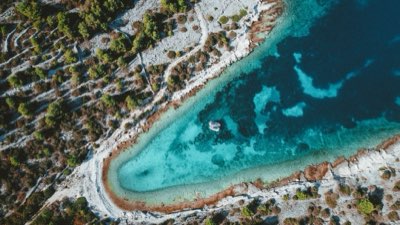
A local fisherman pulls a net from the turquoise water, inspecting the texture of the floating vegetation. Seaweed quality by month is tied to the life cycles of the organisms residing within the mats.
In the southern Sargasso Sea, the environment serves as a vital spawning ground for both the European and American eel.
The biological activity in the area is intense, as these eels rely on the seaweed for protection and sustenance.
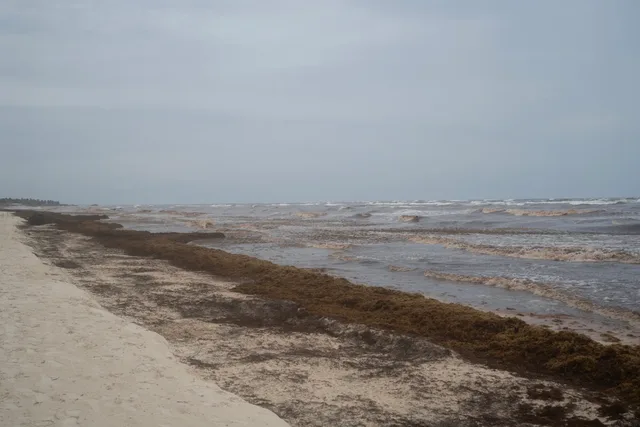
Historical observations from the early 19th century indicate that the European eel migrates more than 5,000 km (3,100 mi), while the American eel migrates approximately 2,000 km (1,200 mi) to reach these waters. The health of the seaweed mats directly impacts these migratory patterns.
What is the local seaweed buying guide for observers?
An enthusiast walks along the shoreline, looking for specific traits in the drifting vegetation. A local seaweed buying guide for those interested in the ecosystem involves observing the density, species type, and the best time for seaweed harvest.
While one cannot "buy" the ocean, selecting the right time to observe the seaweed involves understanding the current's influence.
To evaluate the seaweed environment, consider these factors: 1. Observe the species, distinguishing between the floating *fluitans* and *natans*. 2. Check the proximity to the North Equatorial Current to predict mat density. 3.
Monitor the water temperature, which influences the buoyancy and movement of the mats.
I once watched a dense mat of seaweed drift past a reef, noting how the light filtered through the golden-brown fronds and considering how to judge seaweed complexity.
Can I use a Sargasso size and quality guide?
A navigator traces a map, marking the vast expanse of the open sea. Using a Sargasso size and quality guide means understanding the immense scale of the habitat. The area is roughly 4,000 km (2,500 mi) wide, making it one of the largest floating ecosystems on the planet.
The quality of the habitat is often judged by the diversity of life it supports. Because it is a spawning ground, the presence of juvenile eels can indicate a healthy, nutrient-rich environment.
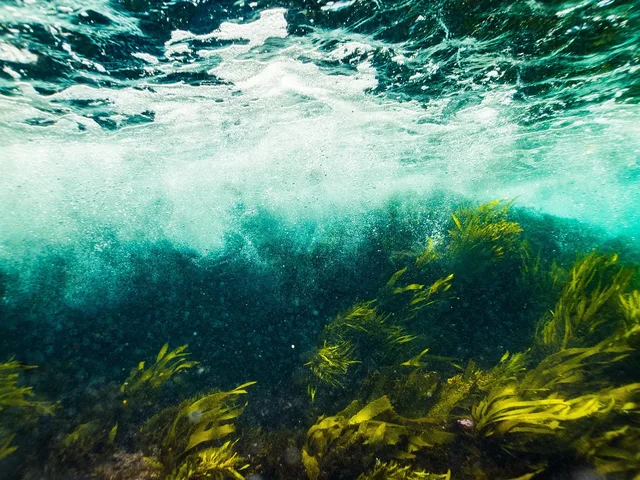
The interaction between the Gulf Stream and the North Atlantic Drift creates the specific conditions necessary for these mats to remain cohesive and productive.
What are the expert local seaweed recommendations?
A guide points toward the horizon, explaining the patterns of the deep blue water. Expert local seaweed recommendations for visitors focus on timing the observation with the seasonal currents.
Instead of looking for a specific date, look for the period when the North Equatorial Current is most active in bringing mats toward the observation points.
To find the best viewing conditions, follow these steps: 1. Identify the current direction near your coastal location. 2. Look for the presence of *Sargassum* species in the nearshore waters. 3. Verify the lack of heavy storm activity, which can disperse the mats too widely.
I always check the local current reports before heading out to the water to see if the mats are drifting closer.
How do I apply a local seaweed selection tips approach?
A student uses a magnifying glass to look at a small piece of vegetation on the sand. Applying Sargasso seaweed selection tips involves looking for intact structures that have not been broken down by heavy surf.
The most interesting specimens are those that still show the complex branching of the *fluitans* or *natans* species.
When examining seaweed, follow this process: 1. Locate a fragment that has recently washed ashore. 2. Inspect the air bladders, which allow the seaweed to float. 3. Note the color and thickness of the fronds. 4. Perform a final check to ensure the specimen is not covered in excessive sand or debris.

The effectiveness of these tips is limited to observing seaweed that has reached the shore, as the primary ecosystem remains in the open ocean.
| Feature | Sargasso Sea Scale | Eel Migration Distance |
|---|---|---|
| Measurement | 4,000 km (2,500 mi) | 5,000 km (3,100 mi) |
- Understanding the Sargasso seaweed monthly status requires recognizing that this ecosystem is defined by massive oceanic currents rather than a fixed calendar.
- Travelers and observers should focus on the seasonal shifts in water movement and the presence of specific species like *Sargassum fluitans* and *Sargassum natans*.
- This guide covers the geographic boundaries of the seaweed, the biological importance of the area, and how to observe these floating mats within the Atlantic currents.
The movement and biological importance of the Sargasso seaweed are inseparable from the massive currents that define its boundaries.
By understanding the role of the Gulf Stream and the migratory needs of species like the eel, observers can better appreciate the scale and complexity of this floating Atlantic ecosystem.





Comments 0