Chichen Itza guide why 4 km site holds value
"The stones of Chichen Itza stand as a testament to a civilization that mastered the alignment of heaven and earth, leaving a legacy that continues to draw millions to the Yucatan Peninsula."
Chichen Itza represents a pinnacle of Maya civilization, serving as a major political and religious hub that remains one of Mexico's most significant cultural landmarks.
This UNESCO World Heritage Site is the second-most visited of Mexico's archeological sites, providing a direct link to ancient architectural and astronomical mastery.
Visitors seeking to understand the Chichen Itza Maya history should recognize its role as a center of power, though it is important to note that its preservation depends on federal management.
* The site is a UNESCO World Heritage Site. * It ranks as the second-most visited archeological location in Mexico. * Stewardship is maintained by the National Institute of Anthropology and History (INAH). * Sacred cave networks like Balankanche are located nearby.
What defines the Chichen Itza Maya history?
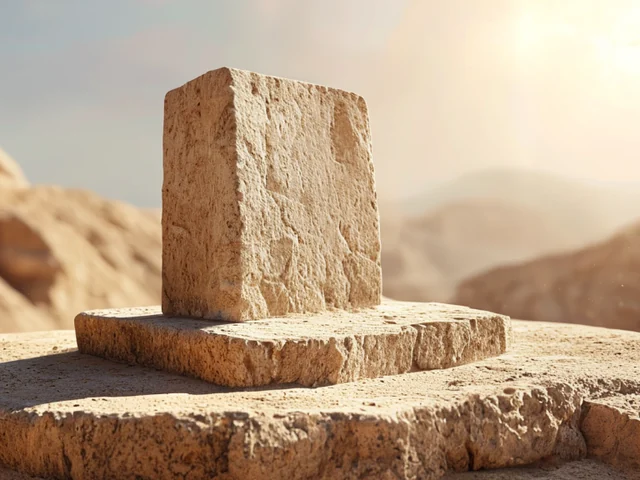
At noon, I run my fingers over the warm limestone to feel the weight of Chichen Itza Maya history.
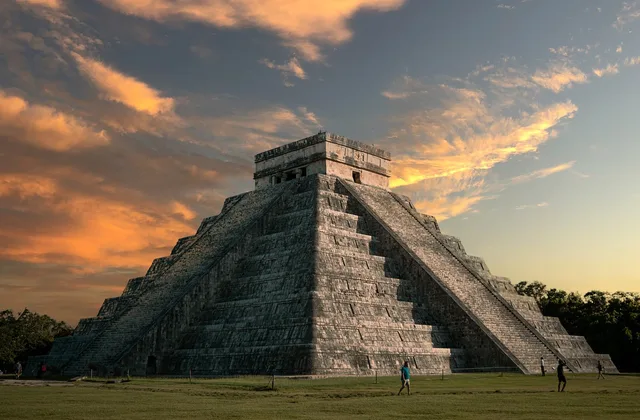
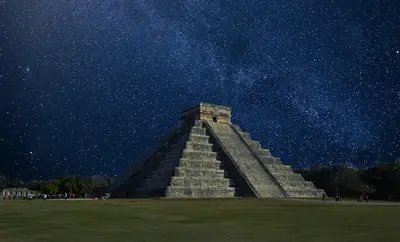
Walking through the dust of the archeological zone, the shadow of El Castillo stretches across the limestone ground. This massive pyramid serves as a physical manifestation of the complex astronomical knowledge held by the Maya.
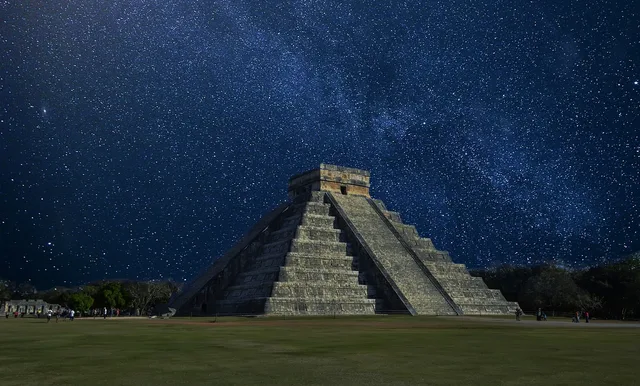
Understanding the Chichen Itza Maya history requires looking at how these structures functioned as both temples and calendars.
The site's profound importance is reflected in its status as a UNESCO World Heritage Site. It holds a unique position in the country, as it is the second-most visited of Mexico's archeological sites.
This high level of interest highlights the enduring Chichen Itza cultural value that continues to captivate global explorers.
I believe the second stage of this civilization is the most significant.
How is the site protected today?
I watch the guard walk the perimeter at dawn, feeling the cool breeze sweep through the ruins of Chichen Itza.
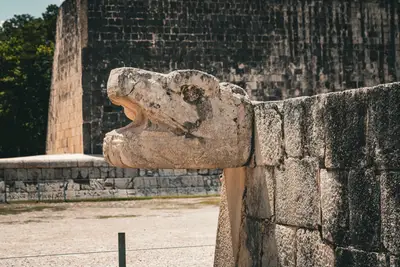
A security guard walks the perimeter of the stone ruins as the morning sun hits the carved serpent heads. Maintaining these ancient structures requires constant vigilance and professional oversight to prevent erosion and damage.
The preservation of such a massive complex is a matter of national importance.
The ruins of Chichen Itza are federal property.
This institutional oversight ensures that the ancient stone remains intact for future generations.
- Establish perimeter boundaries.
- Implement regular site inspections.
- Restrict access to sensitive structures.
What is the surrounding Maya heritage?
A traveler treks through the dense green foliage located just outside the main temple complex. Beyond the immediate stone structures, the landscape holds deep spiritual significance for the local Yucatec Maya people.
This connection to the earth is vital to understanding the broader Maya civilization significance.
Approximately 4 km (2.5 mi) southeast of the Chichen Itza archeological zone, there is a network of sacred caves known as Balankanche (Spanish: Gruta de Balankanche, Balamkaʼancheʼ in Yucatec Maya). These geological formations played a crucial role in the spiritual life of the region.
Exploring this area provides a deeper look into the ancient Maya architecture and its relationship with the natural world.
How has the area changed over time?
An old researcher looks over faded maps of the Hacienda Chichén while sitting in a quiet courtyard. The transition from an active research hub to a modern tourist destination has shifted the local economy significantly.
According to World Bank data, Mexico recorded international tourist arrivals of 51,128,000 in 2020.
Historical shifts in land use have shaped how we interact with these ruins today.
Following this departure, Barbachano turned the location into another seasonal hotel.
This transition marked a shift from purely academic investigation toward the modern era of heritage tourism.
How can you visit the ruins properly?
A tourist adjusts their sun hat before stepping onto the stone path leading toward the Great Ball Court. Planning a visit requires following specific protocols to respect the site's sanctity and ensure safety. To experience the site effectively, follow these steps:
- Arrive at the archeological zone during the early morning hours to avoid the peak heat. 2. Hire a local guide to explain the astronomical alignments of the pyramids. 3. Stay within the designated paths to protect the integrity of the federal property.
I observed how following these steps allowed for a much more contemplative experience of the ancient stones. Before leaving, always perform a final check of your belongings and ensure you have followed all site-specific rules regarding photography and movement.
Can the site be studied in all conditions?
A scientist examines a limestone fragment under a microscope in a controlled laboratory setting. While much has been uncovered, certain environmental and physical factors limit the scope of ongoing research.
The ability to conduct deep excavations is limited by the sacred nature of specific areas, such as the Balankanche cave network.
| Feature | Detail |
|---|---|
| Site Status | UNESCO World Heritage Site |
| Visitor Rank | 2nd most visited in Mexico |
Related
What are the limitations of the stones' study?
- The ability to conduct deep excavations is restricted by the sacred character of certain zones, such as the Balankanche cave network. 2. Researchers must proceed with caution when examining the stones because of the environmental factors present at the site. 3. The preservation of the stones requires constant professional supervision to mitigate damage from the elements.
The stones of Chichen Itza demonstrate a masterful connection between celestial observations and terrestrial construction. This alignment is a key element in defining the Maya civilization's achievements.
The site's importance is underscored by its designation as a UNESCO World Heritage Site, which mandates specific protective measures.
How does the site's status influence visitor interaction?
The site's ranking as the second-most visited archeological location in Mexico dictates the flow of tourism management. Visitors must adhere to established protocols to respect the federal property. This high volume of interest necessitates the stringent oversight provided by INAH.
The stones of Chichen Itza benefit from this national attention, which ensures continued funding for maintenance. Tourists gain a direct connection to ancient architectural mastery when they observe the structures.
Following the designated paths is a condition set forth by the stewards of the Chichen Itza ruins.
The transition from academic investigation to heritage tourism has altered the local environment surrounding the stones. This shift requires visitors to understand the site's dual role as a historical artifact and a modern destination.
The scale of the Chichen Itza complex demands careful navigation by all who explore it.


Comments 0